







In 2026 the skin economy inside Counter-Strike 2 (formerly Counter-Strike Global Offensive – CSGO) has evolved into one of the most structured digital marketplaces in gaming. In 2026, competitive players are no longer casually trading cosmetics — they are managing digital assets strategically.
If you play ranked, follow esports, or actively trade skins, understanding how experienced players optimize their inventories can protect your capital, improve liquidity, and prevent common mistakes.
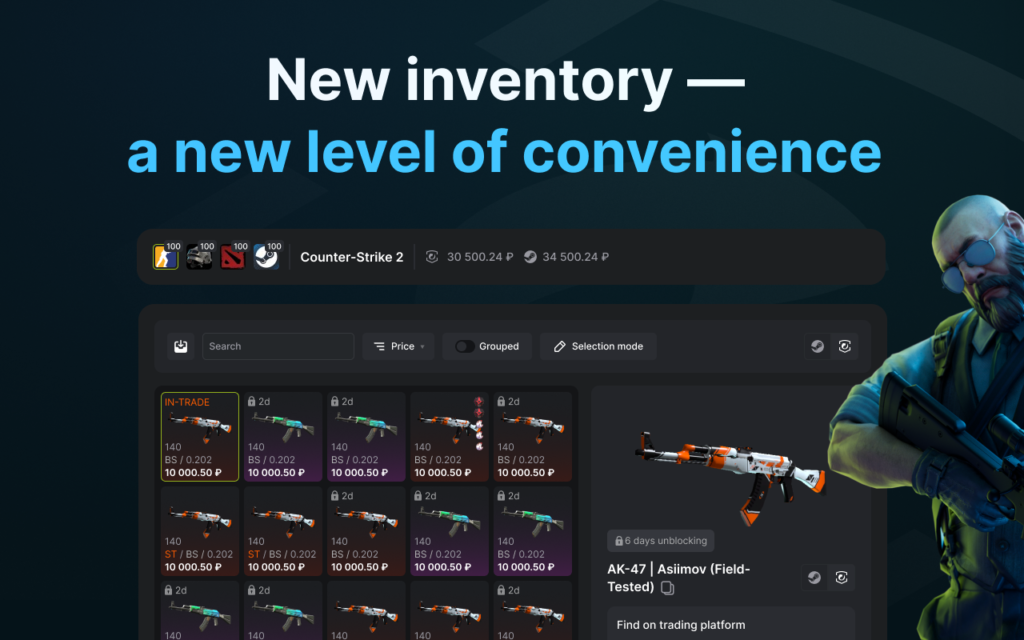
What Does Inventory Optimization Mean in CS2 Formally CSGO?
Competitive players treat their CS2 inventory like a structured digital portfolio. The goal is not just to own rare skins — but to maintain items that retain value, move quickly in the market, and align with long-term trading strategy.
In 2026, inventory optimization is about discipline, data awareness, and balancing gameplay aesthetics with smart market decisions.
Inventory optimization refers to managing your skins in a way that:
- Maintains high resale liquidity
- Reduces exposure to volatility
- Consolidates value into high-demand items
- Avoids unnecessary trading losses
- Balances personal gameplay preferences with market logic
Competitive players treat their inventories like structured portfolios rather than random collections.
Why Skin Trading in 2026 Is More Strategic Than Ever

The CSGO skin market is influenced by:
- Esports tournaments
- Case availability and removals
- Influencer visibility
- Steam marketplace dynamics
- Supply-demand imbalances
Unlike 2016–2020, today’s market participants are more informed. Pricing inefficiencies close quickly. Arbitrage opportunities are smaller. That means strategy matters more than luck.
Players who optimize properly:
- Trade less frequently
- Hold higher quality items
- Focus on liquidity
- Monitor demand cycles
Read More: UnblockedGames911 GitLab.io (2026 Guide)
Building a Structured CSGO Inventory: The 3-Tier Approach
Serious players in Counter-Strike 2 (formerly Counter-Strike: Global Offensive, CSGO) don’t build random skin collections. Instead, they structure their inventory using a 3-tier system that balances gameplay, liquidity, and long-term value.
This approach helps reduce risk, improve trade flexibility, and maintain consistent market exposure.
Experienced competitive players often divide their inventory into three categories:
1️⃣ Tier 1: Active Play Skins (Performance + Aesthetic Value)
These are the skins used regularly in competitive matches:
- AK-47
- M4A1-S / M4A4
- AWP
- Glock-18
- USP-S
Players select skins they enjoy visually but avoid tying up excessive capital in too many loadout variations.
Key principle: Keep one clean, premium version rather than multiple mid-tier duplicates.
Best Practice:
- Own one clean, high-quality version per weapon.
- Avoid holding multiple cosmetic variations of the same gun.
- Choose skins with strong resale demand in case you need to liquidate.
The goal is enjoyment without sacrificing flexibility.
2️⃣ Tier 2: High-Liquidity Assets (Fast-Moving Items)
Liquidity is critical in 2026.
High-liquidity skins typically include:
- Popular knife finishes
- Common high-demand rifle skins
- Active case items with strong trade volume
Why liquidity matters:
- You can exit positions quickly.
- You avoid long selling delays.
- You reduce spread losses.
Competitive traders prefer items that move daily rather than rare skins that sit for weeks.
Why this tier matters:
- You can exit quickly during market changes.
- You reduce spread losses.
- You maintain bargaining power in trades.
Liquidity protects you from being stuck with hard-to-sell items.
3️⃣ Long-Term Strategic Holds (Supply-Based Assets)
Some players hold:
- Discontinued case skins
- Rare float versions
- Historically stable collections
However, experienced traders limit this exposure. Overcommitting to speculative holds increases risk.
Important Principle:
Speculation should never dominate your portfolio. Long-term holds carry higher volatility and lower liquidity.
Why the 3-Tier System Works
This structured approach creates balance:
- Tier 1 ensures gameplay satisfaction.
- Tier 2 maintains flexibility and stability.
- Tier 3 allows calculated upside exposure.
Instead of emotional collecting, you operate with strategy and discipline.
In today’s mature CS skin market, structure beats randomness. Players who divide their inventory intentionally make clearer trading decisions, reduce risk, and adapt faster to market shifts
Understanding Float Value, Wear, and Market Premiums
One of the biggest differences between casual and competitive traders is float awareness.
Every skin has a float value between 0.00 and 1.00 that determines wear condition:
- Factory New
- Minimal Wear
- Field-Tested
- Well-Worn
- Battle-Scarred
Low float Factory New skins often command a premium — but only when buyers recognize it.
Important considerations:
- Extremely low float versions can outperform standard ones.
- Not every “rare” float has strong demand.
- Pattern-based premiums apply only to specific finishes.
Experienced traders verify actual sales history before paying over market price.
How Esports Events Influence Skin Prices
Major tournaments impact skin visibility and short-term demand.
When a professional player uses a specific skin during a high-profile event, visibility increases. However, seasoned traders understand:
- Hype-driven spikes are often temporary.
- Buying during peak attention is risky.
- Selling into hype is usually safer than chasing it.
Monitoring tournament cycles allows optimized timing rather than emotional buying.
Why Competitive Players Prioritize Consolidation Over Quantity
One common mistake is holding too many low-tier skins.
Experienced players consolidate:
- Trade 5–8 mid-tier skins into one high-demand asset.
- Reduce inventory clutter.
- Minimize tracking complexity.
Benefits of consolidation:
- Easier valuation tracking
- Higher average liquidity
- Reduced psychological stress
Clean inventories perform better long term.
Risk Management in CS2 Skin Trading
While skins are digital items, they carry financial risk.
Competitive players manage risk by:
- Avoiding emotional decisions
- Diversifying across a few stable items
- Not allocating all funds to speculative skins
- Tracking historical price behavior
Important reality: Skin prices depend entirely on game ecosystem health. They are not guaranteed investments.
Risk management protects both capital and enjoyment.
Security Best Practices Every Competitive Trader Follows
Optimization includes security.
Serious traders always:
- Enable Steam Guard Mobile Authentication
- Confirm trade URLs carefully
- Avoid impersonator accounts
- Double-check bot identities on marketplaces
One compromised trade can eliminate months of strategic gains.
Trustworthiness in trading begins with account safety.
Balancing Aesthetics in CSGO With Market Logic
Competitive players enjoy premium skins — but they balance taste with practicality.
Smart approach:
- Keep 1–2 high-quality “play skins.”
- Maintain the rest as liquid or structured assets.
Emotional attachment often causes overpayment. Discipline protects value.
Common Mistakes That Hurt Skin Traders in 2026
The skin economy in Counter-Strike 2 (formerly Counter-Strike: Global Offensive – CSGO) is more mature and competitive than ever. With better price tracking tools and smarter participants, small mistakes now cost more than they did years ago.
Here are the most common errors that continue to hurt skin traders in 2026 — and how competitive players avoid them.
- Overpaying for Personal Preference
- Ignoring Liquidity Metrics
- Trading Too Frequently
- Buying During Esports Hype Peaks
- Holding Too Many Low-Tier Skins
- Ignoring Float and Condition Premiums
- Failing to Diversify Within the Game Ecosystem
- Neglecting Account Security
- Panic Selling During Short-Term Dips
- Treating Skins Like Guaranteed Investments
Optimization means minimizing friction, not maximizing trade count.
Real-World Observations From Active Traders
Based on community behavior and trading patterns in 2025–2026:
- Fewer, stronger assets outperform large mixed inventories.
- Liquidity consistently beats theoretical rarity.
- Timing matters more than constant flipping.
- Emotional discipline determines long-term outcomes.
The market rewards patience and structure.
Is CSGO Skin Trading Still Worth It in 2026?
For competitive players, skins serve three purposes:
- Gameplay personalization
- Community identity
- Tradable digital asset exposure
However, realistic expectations are crucial. The market is mature, competitive, and data-driven.
Optimization is not about “getting rich.”
It is about minimizing inefficiency and maximizing flexibility.
Final Thoughts: The Competitive Edge in CSGO Skin Trading
In 2026, inventory optimization in Counter-Strike is about:
- Liquidity first
- Data over emotion
- Consolidation over clutter
- Security without compromise
- Balanced enjoyment
Competitive players win not just in matches — but in how they manage their digital assets.
If you approach your inventory strategically, you reduce risk, improve flexibility, and maintain long-term control over your skin portfolio.